
Why Pest Control Companies Need Service Pages That Answer Customer Questions
Why Pest Control Companies Need Service Pages That Answer Customer Questions
A homeowner does not wake up excited to research pest control.
They wake up because something is scratching in the wall, ants have taken over the kitchen, termites were discovered during a home inspection, or a mosquito problem is making the backyard unusable.
That person is not looking for a clever slogan.
They want to know three things:
What is happening? Can you handle it? What should I do next?
That is why a pest control website needs more than one generic services page with a paragraph that says, “We eliminate unwanted pests with safe and effective solutions.”
Your service pages should answer the real questions customers ask before they call.
One Generic Pest Control Page Cannot Do Every Job
Termites, rodents, mosquitoes, roaches, ants, bed bugs, spiders, fleas, wasps, wildlife, and general household pest control are not the same customer problem.
The customer’s urgency is different. The inspection process may be different. Treatment options are different. Safety questions are different. The property conditions are different.
Trying to explain all of that on one page usually creates a thin summary of everything and a useful explanation of nothing.
For the pest services that matter most to your business, dedicated pages give you room to explain the problem in normal language.
A termite page can discuss signs of activity, inspection, treatment approaches your company actually provides, and what homeowners should expect.
A rodent page can explain common entry points, inspection, exclusion work if offered, trapping or removal methods, sanitation considerations, and when a customer should call.
A mosquito page can explain recurring treatment plans, breeding conditions, expectations, and seasonal considerations.
The goal is not to write an encyclopedia about insects and wildlife. It is to help the right customer recognize that your company handles the problem.
Answer the Question the Customer Is Really Asking
Homeowners often arrive at pest-control pages with a question hidden inside the search.
“Termite treatment near me” may really mean, “Are these termites and how much damage could they cause?”
“Rodent control” may mean, “Something is in my attic and I need it gone.”
“Mosquito control” may mean, “Can I use my backyard without getting eaten alive?”
Your service page should acknowledge the situation before launching into your company’s process.
Useful questions to answer include:
- What are common signs of this pest?
- When should a homeowner call a professional?
- Does your company inspect before treating?
- What types of treatment or control do you actually provide?
- Is recurring service needed?
- Are there preparation instructions?
- What areas do you serve?
- How does the customer request service?
Be careful with health and safety claims. Do not diagnose illness or make promises that go beyond what your service can actually accomplish.
Practical, accurate information builds more confidence than exaggerated fear.
Strong Service Pages Help Search Engines Understand the Business
Clear service pages are useful for customers first, but they also give search engines better information about what your company does.
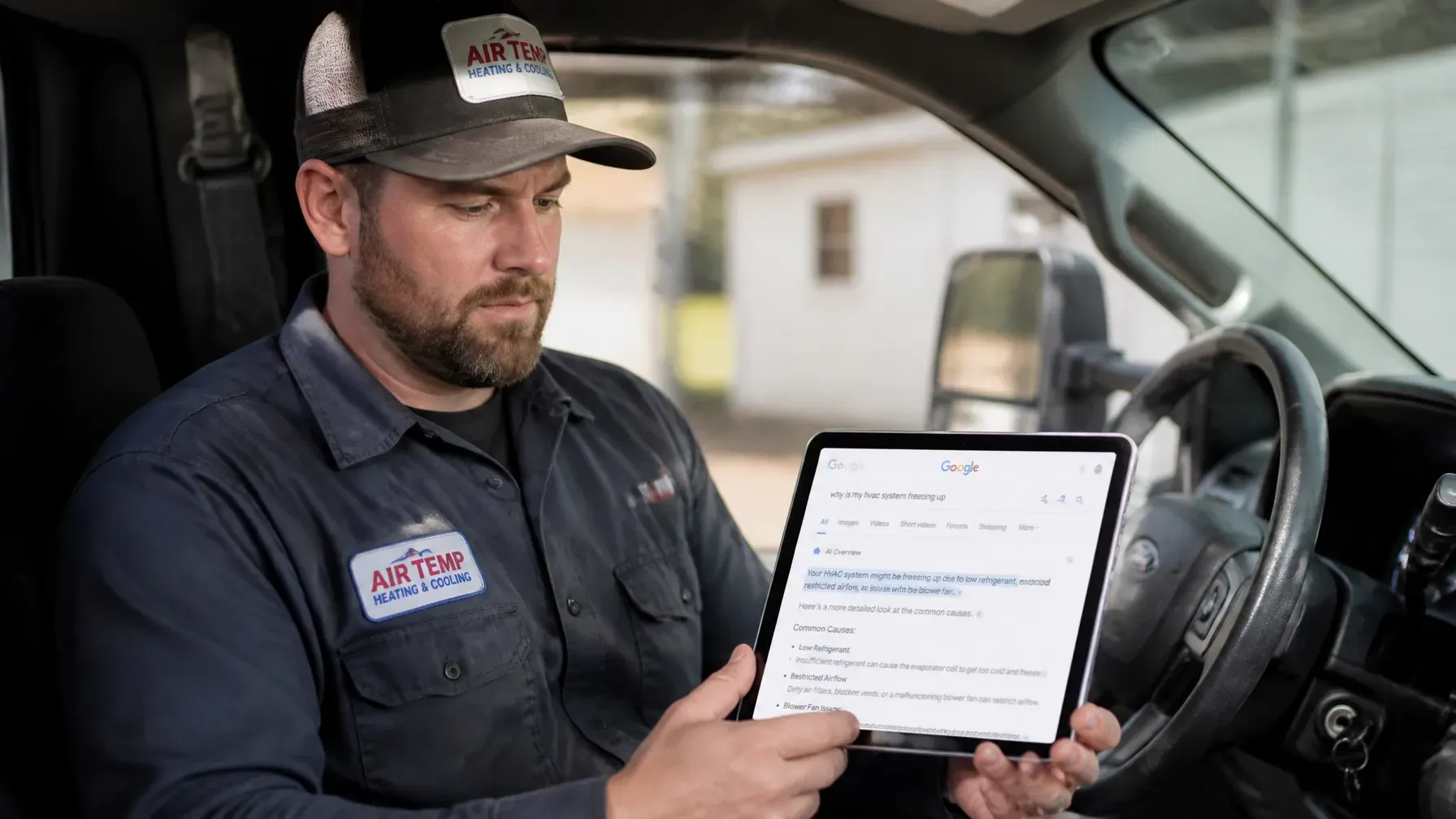
Google’s current guidance for generative AI features says foundational SEO best practices still apply because AI Overviews and AI Mode rely on Google’s core Search systems. Google recommends useful, unique, expert-led content rather than mass-producing pages for every possible search variation. Review the official guidance here: Optimizing for Generative AI Features on Google Search.
That fits pest control perfectly.
You do not need fifteen almost-identical pages for “ant control,” “ant exterminator,” “ant removal,” and “get rid of ants.”
You need one strong page that clearly explains the ant-control service your company provides.
If the page genuinely covers several distinct service types, break them into logical sections. If a service is important enough to deserve its own page, give it enough useful information to justify the page.
Do Not Build a City-Page Factory
Local pest control companies often want to rank across many communities.
That makes sense.
The bad version of that strategy is creating forty copies of the same page and changing only the city name.
“Termite control in Houston.”
Copy.
“Termite control in Sugar Land.”
Copy.
“Termite control in Pearland.”
Copy.
That does not create forty useful resources. It creates forty near-duplicates.
If you build location pages, make them genuinely local. Explain which pest services are available there, property types you commonly serve, seasonal or environmental considerations when they are relevant and accurate, service boundaries, and how customers in that community request service.
A real page earns its existence by helping someone.
Explain What Happens Before Treatment
Pest control can make customers nervous because they may not know what to expect.
Will someone need to inspect first?
Do pets need to be moved?
Should food be stored?
Does furniture need to be moved?
Can the family stay in the home?
The answers depend on the service and products your company actually uses, so do not post generic preparation instructions that may not apply.
Instead, explain your process at the right level.
For example:
“A technician will inspect the affected areas and confirm the recommended service before treatment. Preparation requirements depend on the pest and treatment method, and our team will provide specific instructions before the appointment.”
That tells the customer what happens without pretending every job is identical.
Explain What Happens After Treatment
The service page should not end when the technician leaves.
Customers may want to know whether follow-up is included, whether recurring service is recommended, when they should expect activity to decrease, and what conditions may cause pests to return.
Again, be precise.
Do not promise that every pest problem disappears instantly if that is not how the service works.
If your company offers warranties or retreatment policies, explain them accurately.
If some services require ongoing prevention, say so.
Clear expectations reduce confusion later.

Use Real Proof Instead of Generic Claims
Every pest control company says it is reliable.
Every pest control company says it cares about customers.
Every pest control company says its technicians are professional.
Show the evidence.
Use real technician photos. Show branded vehicles. Display legitimate licenses or certifications where appropriate. Explain years in business if accurate. Link to real reviews. Show community involvement. Explain the service process.
Specific proof answers the customer’s trust questions better than “We are the best pest control company in town.”
Make the Call to Action Match the Service
Not every pest problem has the same urgency.
A customer who sees termites may want an inspection.
A homeowner with a wasp nest near the front door may want immediate service.
A mosquito-control customer may want recurring service pricing.
Your page should tell the visitor what to do next.
Examples include:
- Request a Pest Inspection
- Request Termite Service
- Schedule Rodent Control
- Get a Mosquito Control Quote
- Call for Same-Day Availability
Use only actions your company actually supports.
If customers cannot book online, do not put a “Book Now” button on the page and then send them to a generic contact form.
Measure Which Service Pages Generate Real Opportunities
Once service pages are built, track what they do.
Search Console can show which pages receive impressions and clicks from Google. Google Analytics can help measure website visits and lead-form interactions. Your call tracking, CRM, or office system should record the outcome.
For each pest service, ask:
Is visibility increasing?
Are people visiting the page?
Are they calling or submitting forms?
Are the inquiries in your service area?
Are they requesting the service the page describes?
Are those inquiries becoming appointments and customers?
A termite page that produces fewer inquiries but higher-value inspections may be more important than a general pest page generating large amounts of low-intent traffic.
Do not judge every page only by raw traffic.
Your Service Pages Should Make the Customer Smarter and the Next Step Easier
The best pest control service pages do not scare people into calling.
They reduce uncertainty.
They help the homeowner understand the problem, recognize whether the company handles it, know what to expect, and take the next step.
That is good for customers.
It is good for your office staff because calls arrive with better context.
It is good for SEO because the site contains clearer, more useful information about the services the business actually provides.
And it is good preparation for AI-driven search because Google’s own guidance says unique, expert-led, people-first content remains the foundation.
At Envision Marketing, we help home service companies build websites and SEO strategies that explain services clearly and turn visibility into inquiries.
If your pest control website has one thin services page trying to do the work of ten useful pages, request a free website and local SEO audit.
Your customers have questions.
Your website should answer them before your competitor does.