

Juneteenth in Houston: The Legacy of Emancipation Park and the Founders of Freedom
Juneteenth is one of the most important dates in American history, but in Houston, it carries an especially deep local meaning. It is not only a commemoration of delayed freedom. It is also a story of what Black Texans built in the aftermath of emancipation: places, traditions, and institutions rooted in dignity, memory, and self-determination.
To understand why Juneteenth matters so deeply in Houston, you have to begin in Galveston on June 19, 1865, and then follow that story into Houston's Third Ward, where Emancipation Park became a lasting symbol of freedom claimed and protected by the community itself.
The News That Arrived Two Years Late
On January 1, 1863, President Abraham Lincoln issued the Emancipation Proclamation, declaring enslaved people in Confederate states to be free. But that declaration did not immediately reach or transform life in every place under Confederate control. In Texas, distance, weak Union enforcement, and deliberate resistance meant that many enslaved people remained in bondage long after freedom had been proclaimed.
That delay lasted more than two years.
On June 19, 1865 , Major General Gordon Granger arrived in Galveston, Texas , with Union troops and issued General Order No. 3 . The order announced that enslaved people in Texas were free and stated that this freedom involved an "absolute equality of personal rights and rights of property" between former enslavers and formerly enslaved people.
What Did That Delay Mean?
The two-year delay was not a minor gap in communication. It meant that freedom had been declared in law, but denied in practice. It meant that thousands of people continued to labor under violence and coercion while the nation had already turned a page on paper.
That truth is central to Juneteenth.
The day is not simply about an announcement. It is about the distance between promise and reality. It is about what happens when justice is delayed, and what it takes for a people to transform that delayed justice into something lived, remembered, and defended.
In Galveston, Granger's arrival marked the moment when federal authority finally forced the issue in Texas. For many, the reading of General Order No. 3 brought shock, relief, uncertainty, and hope at the same time. Freedom had arrived, but it arrived late, and it arrived into a world that still had to be remade.
From Liberation to Place: Why Emancipation Park Matters
The story of Juneteenth in Houston cannot be told without Emancipation Park .
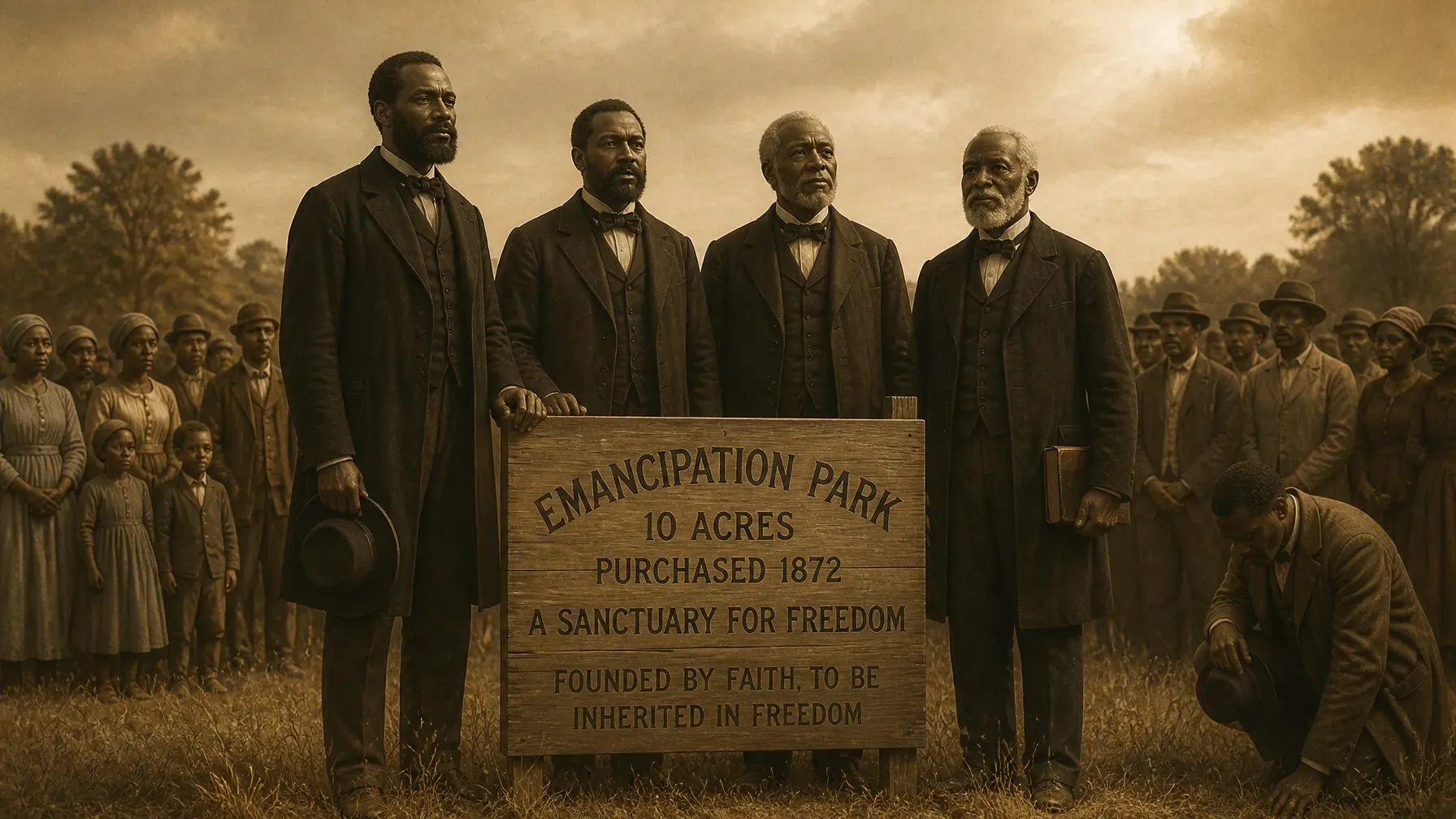
In 1872 , a group of Black leaders in Houston purchased 10 acres of land for $800 so that the local Black community would have a permanent place to celebrate Juneteenth. The four founders were Reverend Jack Yates, Richard Brock, Richard Allen, and Reverend Elias Dibble .
This was far more than a land purchase.
During segregation, Black communities were barred from many public parks and excluded from spaces that white residents could use freely. Houston's Black residents needed a place where they could gather safely, celebrate publicly, and honor emancipation without seeking permission from institutions that denied their full humanity.
That is why the park had to be in Houston's Third Ward . It was not an accident of geography. It was a deliberate act of community building in a historically Black neighborhood. Buying that land created a sanctuary for celebration where none was allowed. It was a radical declaration of self-determination and ownership.
When Reverend Jack Yates, Richard Brock, Richard Allen, and Reverend Elias Dibble helped secure that land, they were doing more than planning an annual gathering. They were preserving memory in physical form. They were ensuring that Juneteenth would have a home.
The Founders of Freedom
The names of Reverend Jack Yates, Richard Brock, Richard Allen, and Reverend Elias Dibble deserve to be spoken clearly because Emancipation Park stands as a testament to their vision.
They understood that freedom required more than legal recognition. It required land, space, community, and permanence. It required places where Black families could assemble with dignity, where children could inherit history not as abstraction but as lived tradition, and where celebration itself could become an act of remembrance.
Their decision in 1872 turned memory into infrastructure.
That legacy still matters because public space shapes public memory. A park is never just a park when it is born from exclusion and reclaimed through collective effort. In this case, Emancipation Park became a community answer to enforced absence. If freedom was denied in one generation, the next generation would still have a place to gather, honor the past, and affirm belonging.
The Meaning Inside the Juneteenth Flag
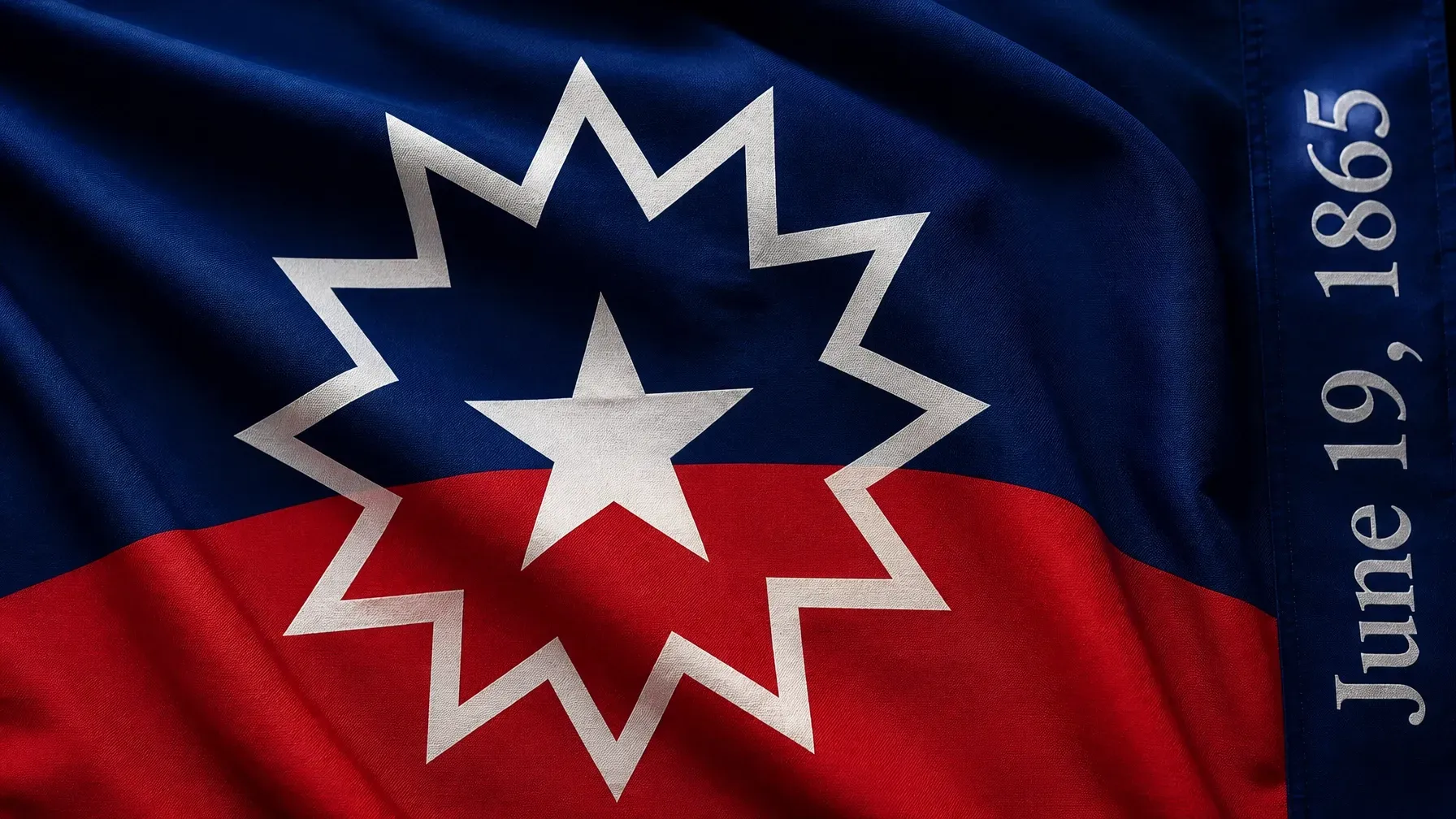
The Juneteenth flag carries its own language of remembrance, and its symbols help tell the larger story.
The Star
The star at the center of the flag represents Texas, the state where Juneteenth began. It also points beyond Texas, reminding us that the story belongs to the entire nation. A single star can hold both local and national meaning: a place of origin and a call to recognition.
The Burst
The burst surrounding the star suggests a new beginning. It evokes emancipation as a moment of transformation, when freedom broke through a system built to deny it. The image carries force and motion, reflecting the idea that liberation is not static. It changes lives, communities, and the nation's understanding of itself.
The Arc
The arc across the flag represents a horizon. It suggests possibility, a future not yet fully reached but clearly visible. In the context of Juneteenth, that horizon carries the tension between what was promised and what still must be pursued. It honors the past while pointing forward.
Together, the star, burst, and arc make the flag more than a commemorative design. They turn it into a visual statement about origin, change, and continuing hope.
A Legacy Rooted in Houston
In Houston, Juneteenth is not only about looking back to Galveston in 1865. It is about recognizing what happened next in the Third Ward. It is about seeing how a community responded to exclusion not with surrender, but with creation.
Emancipation Park stands as one of the clearest examples of that response. It tells the story of a people who claimed space when space was denied to them. It reminds us that celebration can be an act of resistance, that land can become memory, and that remembrance can take root in a neighborhood for generations.
Conclusion: A History Worth Holding Carefully
Juneteenth asks for reflection because it contains both joy and grief, both liberation and delay, both announcement and struggle. In Houston, that reflection leads directly to Emancipation Park and to the four men who helped make sure freedom would be honored in a place of the community's own making: Reverend Jack Yates, Richard Brock, Richard Allen, and Reverend Elias Dibble .
Their act in 1872 was practical, courageous, and visionary. They purchased 10 acres for $800, but what they secured was larger than land. They secured a place for memory, celebration, and belonging.
That legacy remains. It lives in the history of Galveston, in the grounds of the Third Ward, and in every careful remembrance of what Juneteenth means.